
Most new niche site owners spin their wheels. They publish a scattering of “how-to” posts, a few “best of” lists, and some product reviews, hoping something sticks. The result is a disjointed site that confuses both readers and Google, taking months or years to gain traction.
We’ve cut through this noise with a ruthlessly simple content framework we call PVC: Problem, Vs., Conclusion. This isn’t just another acronym. It’s a strategic content architecture designed to systematically capture a niche’s entire buyer journey with just three article types. By focusing exclusively on these, we’ve taken sites from zero to their first $1,000/month in revenue in under 12 months, repeatedly.
Here’s how the PVC strategy works and how to implement it.
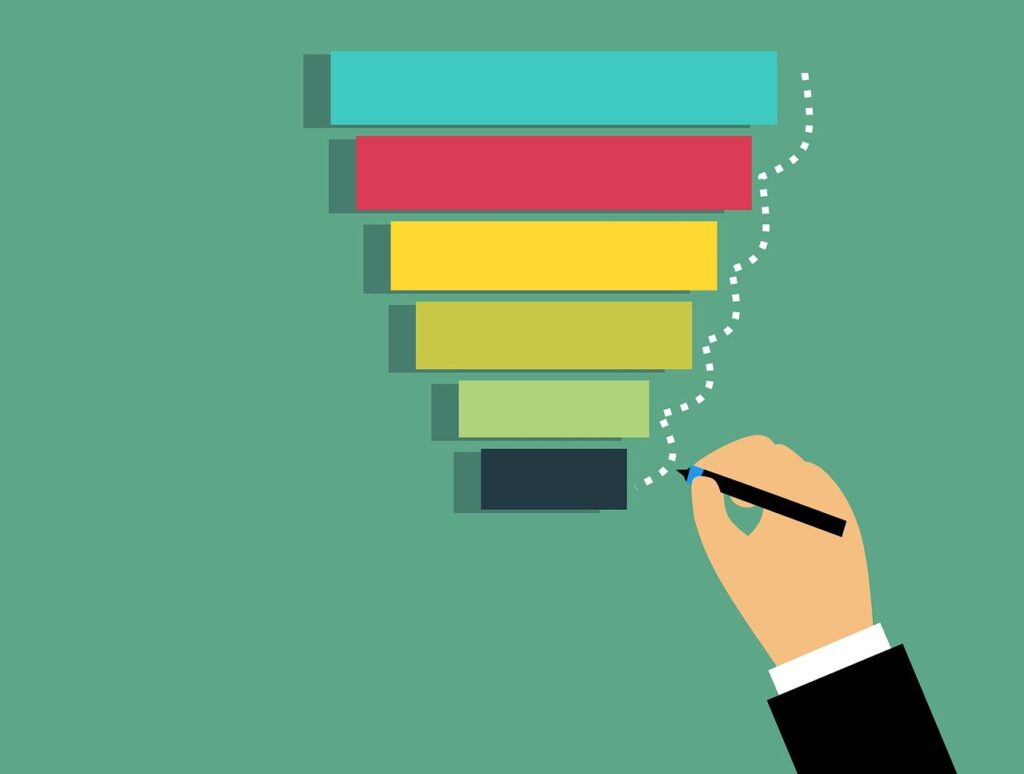
The PVC Philosophy: Own the Funnel, Not Just Keywords
Google ranks pages, but users follow a decision journey. The PVC model maps directly onto this journey, creating a seamless path from problem to purchase on your site.
- Problem (P): The user has a pain point but doesn’t know the solution. (Awareness)
- Vs. (V): The user knows the solution category but needs to choose between options. (Consideration)
- Conclusion (C): The user is ready to pick a specific product and buy. (Decision)
By creating interconnected content for each stage, you become the guide for the entire process, building immense trust and authority.
The Three Pillar Articles of the PVC Strategy
1. The “Problem” Article (The Foundation)
- User Mindset: “I have [X] issue. What can I even do about it?”
- Example Keywords: “my lawn has brown patches,” “how to soundproof a home office,” “chest pain after lifting weights.”
- Content Goal: Establish yourself as a helpful expert. Do not sell. Diagnose the issue and explain the category of solutions.
- Template Structure:
- H1: “Why Does [Problem Happen]? Causes & Solutions Explained”
- Introduction: Empathize with the reader’s frustration.
- The Causes: Detail 3-5 common reasons for the problem.
- The Solution Categories: Introduce the general ways to solve it (e.g., for brown grass: watering, fungicides, aeration).
- Next Steps: “If you’ve determined the issue is [X], the next step is to compare the best tools for the job.” → Link to your “Vs.” article.
- Monetization: Minimal. Maybe a contextual link to a general tool on Amazon. Its job is to capture early traffic and build trust.
2. The “Vs.” Article (The Consideration Engine)
- User Mindset: “I need a [solution type]. What are the best options, and how do they compare?”
- Example Keywords: “corded vs cordless drill,” “soundproofing panels vs foam,” “pre-workout vs coffee.”
- Content Goal: Become the definitive comparison resource. This is where you build topical authority and keep users on your site.
- Template Structure:
- H1: “[Option A] vs [Option B]: A 2026 Comparison for [Audience]”
- Introduction: State that both are solutions, but for different people.
- Comparison Table: A clear, scannable table of key differences (use a plugin like TablePress).
- Deep Dive Sections: “When to Choose A,” “When to Choose B.”
- The Verdict: “For most [specific scenario], we recommend [A/B] because…” → Link to your “Conclusion” article for the winning product.
- Monetization: Contextual affiliate links to both product categories. This page earns primarily by capturing high-intent traffic and routing it to your money page.
The “Conclusion” Article (The Money Page)
- User Mindset: “I’ve decided I need [specific product]. Which is the best one to buy?”
- Example Keywords: “best cordless drill for home use,” “best soundproofing panels for apartments,” “best pre-workout for energy.”
- Content Goal: Provide the final, actionable recommendation. This is your 10X content—the most detailed, EEAT-packed page on the topic.
- Template Structure:
- H1: “The Best [Product] for [Use Case] (2026 Hands-On Review)”
- Quick Answer: A table with your top 3 picks for different budgets/needs.
- How We Tested: Link to your methodology page. Show original photos of the products.
- In-Depth Reviews: For each pick, include pros/cons, who it’s for, and a “Living With It” section.
- The Final Verdict: A clear “Winner” with a strong affiliate call-to-action.
- FAQs: Answer final objections.
- Monetization: Primary affiliate links (Amazon, direct programs). This is your revenue workhorse.
How to Implement the PVC Strategy: A 90-Day Plan
Month 1: Lay the Foundation
- Pick one core product category for your site (e.g., “home gym equipment”).
- Identify 5 major problems your audience faces (e.g., “limited space,” “noisy workouts,” “motivation”).
- Write and publish your 5 “Problem” Articles. Use Ahrefs to find question-based keywords.
Month 2: Build the Consideration Layer
- For each “Problem” article, identify the 2-3 main solution types that emerged.
- Write and publish 3-4 high-quality “Vs.” Articles comparing these solutions.
- Interlink heavily: Every “Problem” article links to its corresponding “Vs.” article.
Month 3: Launch the Money Pages
- For the most promising solution from your “Vs.” articles, identify the top 3-5 specific products.
- Write and publish your first “Conclusion” Article. Invest in making it the best on the web. Buy a product for original photos if possible.
- Interlink: Link from your “Vs.” article to this “Conclusion.” Link from the “Conclusion” back to the “Problem” and “Vs.” articles to complete the funnel.
Why PVC Works So Well for New Sites
- Clarity for Google: You create a clear topic silo with obvious semantic relationships. Google easily understands your site’s expertise.
- Built-In Internal Linking: The strategy demands a strong internal link structure (P → V → C), passing authority directly to your money pages.
- Covers Full Search Intent: You rank for informational (“how to”), commercial investigation (“vs.”), and transactional (“best”) keywords simultaneously.
- Scalable: Once you’ve mastered one PVC funnel (e.g., for “home gyms”), you add another (e.g., for “meal prep”).
Tools to Execute PVC Efficiently
- Keyword Research: Ahrefs or Semrush (for “vs.” and “best” keywords) + AnswerThePublic (for “problem” questions).
- Content Planning: A simple Trello board with columns for Problem, Vs., and Conclusion articles.
- EEAT & Quality: Use Canva Pro for custom graphics in your “Conclusion” articles to stand out.
The Revenue Path: How PVC Gets You to $1k/Month
- Months 1-3: Traffic builds from “Problem” and “Vs.” articles (lower competition). Small affiliate earnings from “Vs.” pages.
- Months 4-6: “Conclusion” pages begin ranking. Authority flows from the interlinked “P” and “V” pages, accelerating their rankings.
- Months 7-9: Your first few PVC funnels are ranking. If each “Conclusion” page generates $100-$300/month, 3-5 of them can collectively hit $1,000/month.
- Months 10-12: Reinvest profits into creating more PVC funnels for related sub-topics, scaling revenue.
Stop publishing random articles. Start building strategic content funnels. The PVC model provides the blueprint to do just that, transforming your site from a scattered blog into a focused, user-centric conversion machine. It’s the simplest path from zero to your first four-figure month.
No responses yet